Richard Francis
I specialise in simplifying complex systems, turning them into clear, practical solutions that support better decisions and stronger outcomes.
I design and build practical AI solutions, integrating LLMs, automation, and cloud-native tools. My work focuses on responsible AI, generative AI workflows, and creating systems that improve clarity, decision-making, and productivity.
I analyse behaviour, systems, and information flows to build clarity frameworks and structured knowledge environments. This includes designing modular architectures, documenting patterns, and creating reproducible logic systems for personal and technical workflows.
I work with AWS and modern cloud tooling to design secure, scalable environments. My focus includes data analysis, automation, and integrating cloud services into lightweight, efficient systems for personal and small‑scale deployments.
Designed and maintained websites, built custom features, and supported clients with technical solutions. Worked across front‑end, back‑end, and content systems, developing a strong foundation in practical web development.
15 years of experience in sales, customer engagement, purchasing, and team leadership. Managed sales teams, handled invoicing and stock control, and developed strong communication and people‑focused skills that continue to support my technical work today.
Outside of development architecture, my time is divided between strategic problem-solving and staying active. I am highly interested in the intersection of artificial intelligence, cognitive systems, and personal knowledge engineering—constantly building practical tools and models that simplify complex digital workflows.
When I am not programming or exploring fresh front-end web design patterns, you can usually find me analyzing tactical positions over a game of chess, studying systems strategy, or keeping active with sports. I find that the deep focus required in competitive strategy games directly influences how I approach clean, structural code architectures indoors.
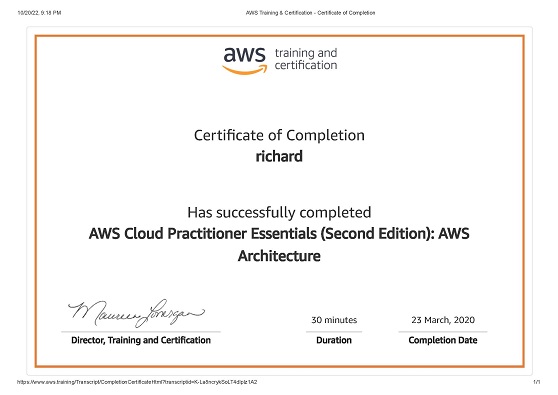
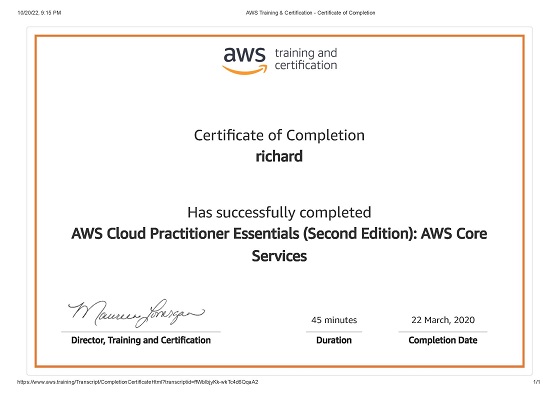
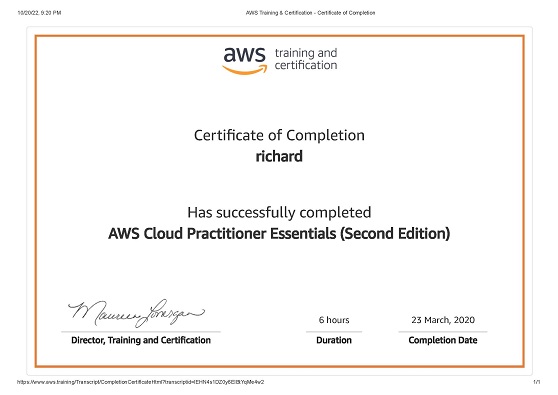
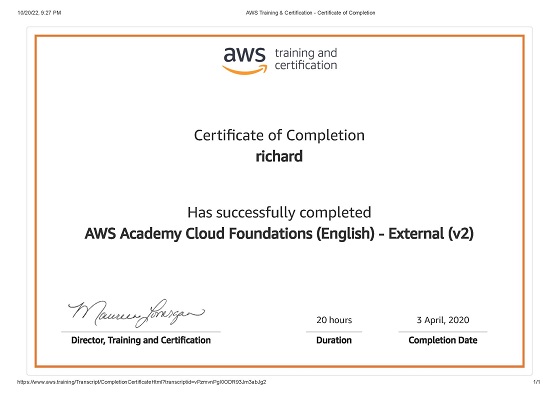
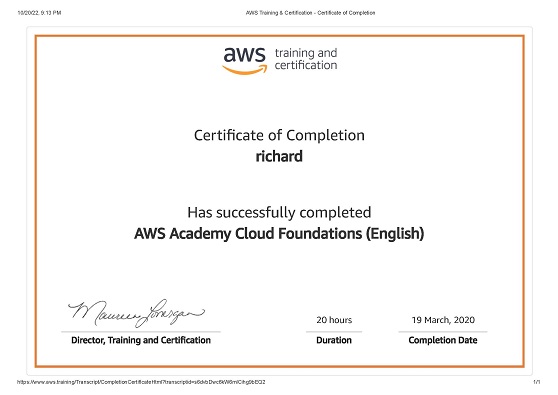
Foundational cloud concepts, architecture, and core AWS infrastructure models.
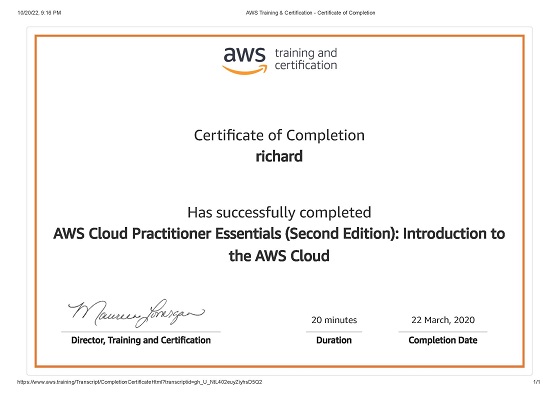
Introductory curriculum covering standard global cloud infrastructure models.
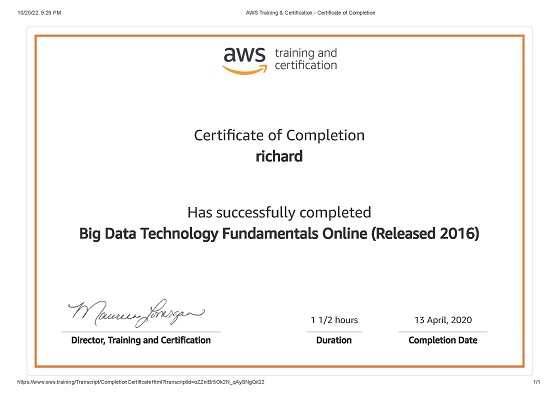
Foundational methodologies for processing cluster architectures and massive datasets.
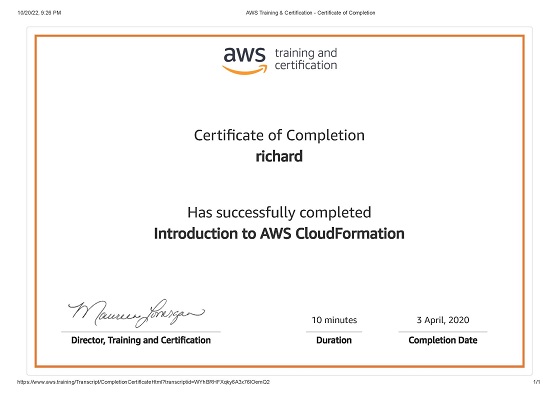
Infrastructure as Code practices using native configuration tracking scripts.
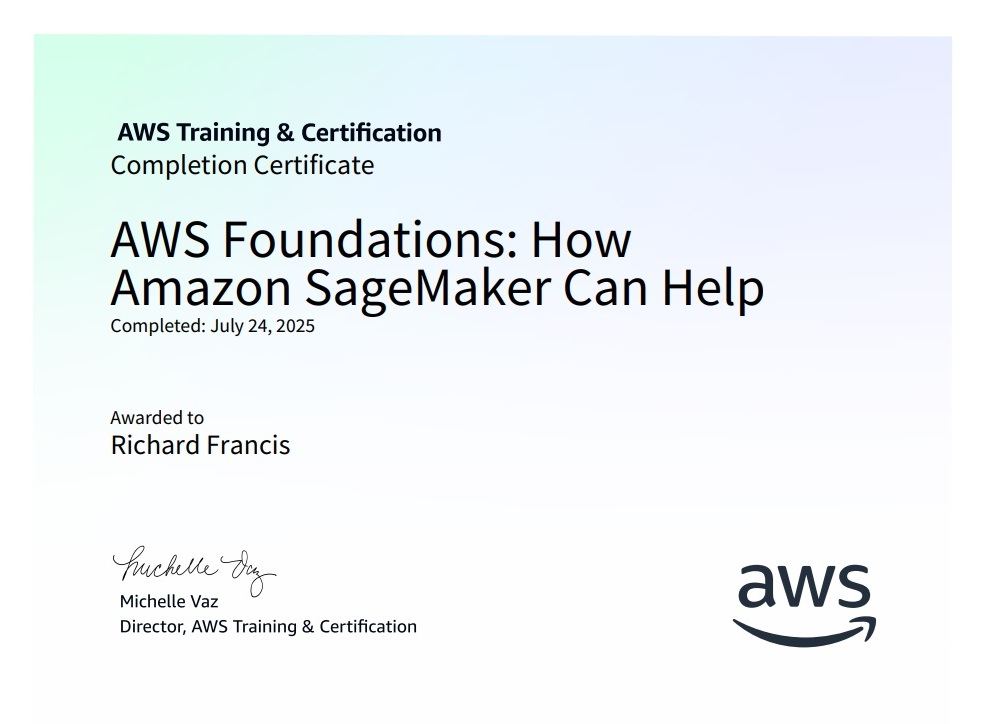
Strategic framework explaining automated pipeline tools inside SageMaker platforms.
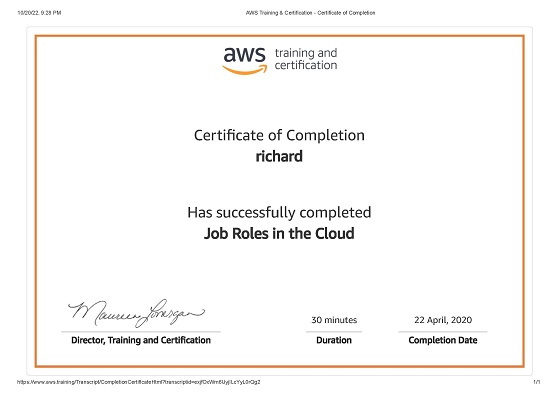
Structural overview tracking distinct engineer specializations and task domains.
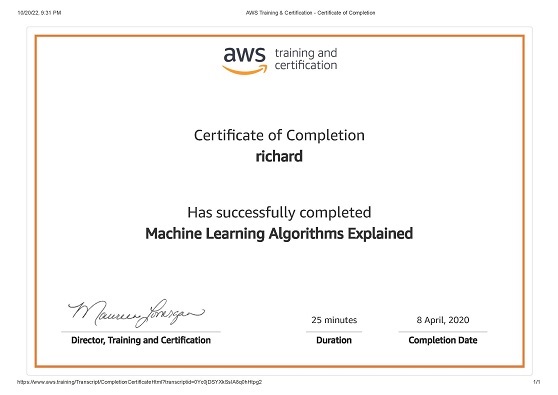
Deep dive tracking supervised, unsupervised, and structural mathematical clustering logic.
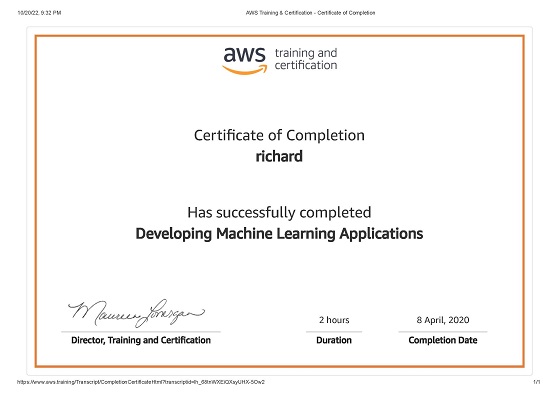
Implementation layers linking external applications with backend models via APIs.
Structural patterns assessing high availability and automated fault tolerance networks.
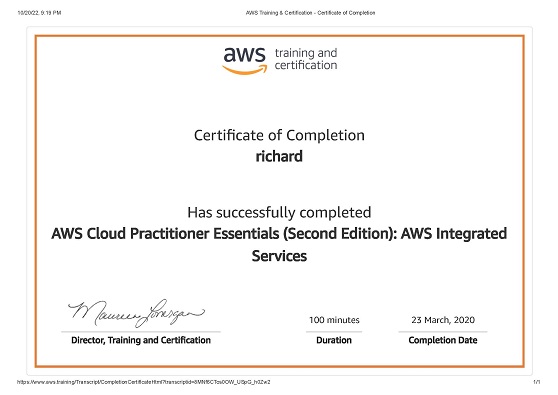
Baseline orientation detailing service deployment methods and elastic resource values.
Functional directory indexing EC2 storage variations and virtual routing arrays.
Scaling protocols linking relational databases with global content delivery systems.
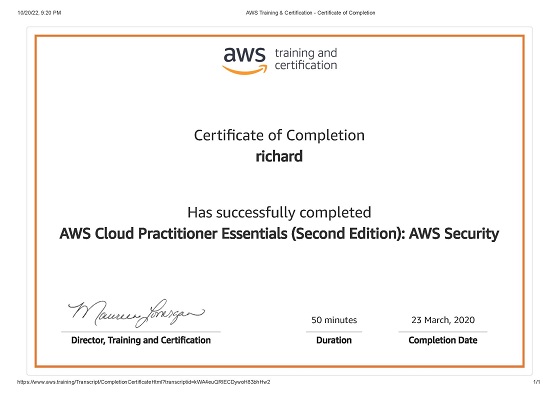
Identity protection layers, security groups, and cloud access compliance models.
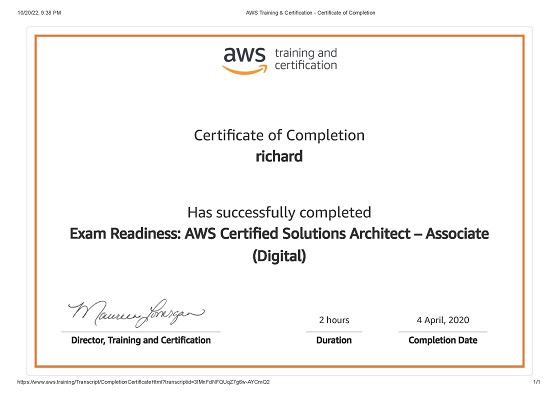
Complete operational standard verification blueprint for standard cloud spaces.
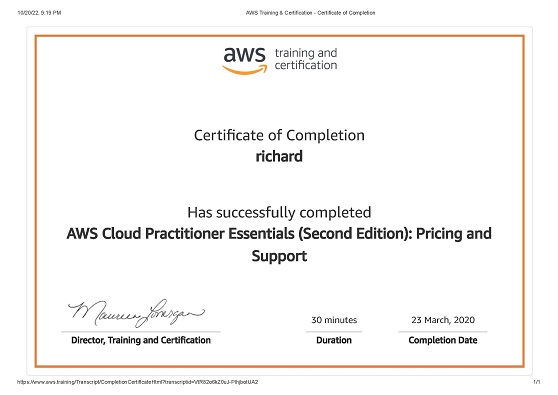
Cost structural maps detailing billing tiers, budget controls, and support paths.
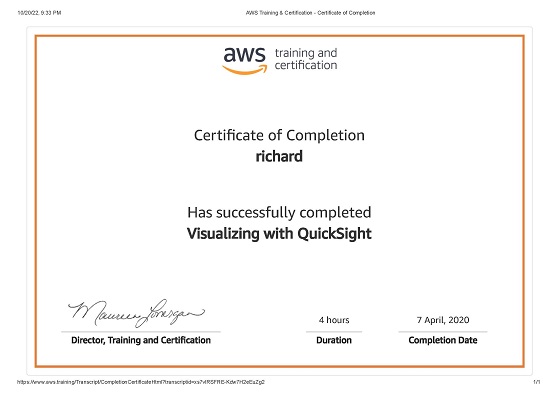
Data ingestion practices and visualization dashboard construction methods.
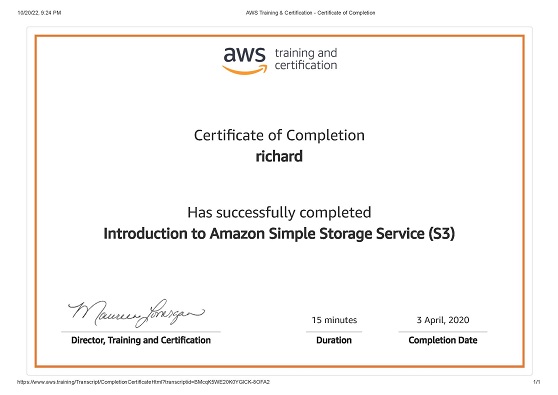
Object-oriented structural options tracking life cycle permissions and storage classes.
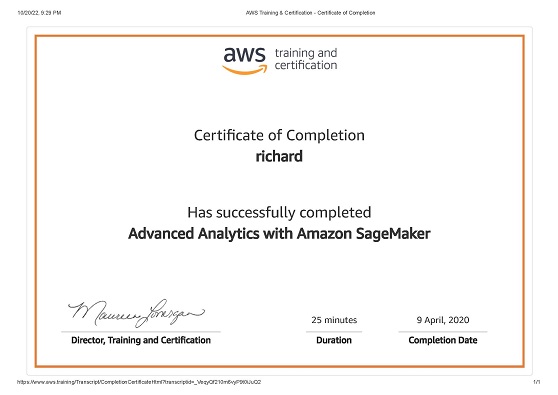
Feature processing patterns tracking predictive statistical modeling parameters.
Setting up workspace interfaces, notebook servers, and virtual sandboxes.
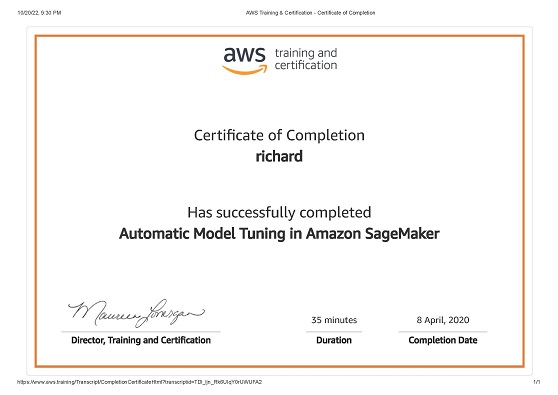
Automating optimization metrics to isolate elite evaluation targets.
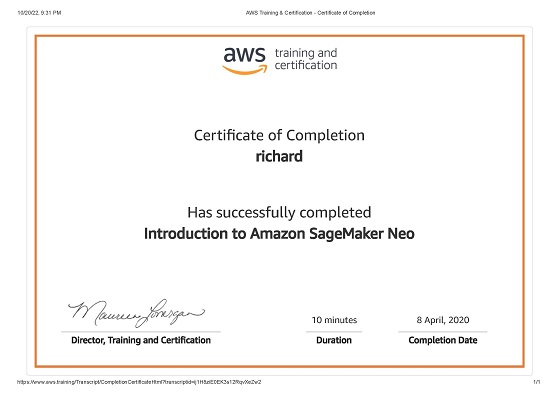
Compiling complex weights to deploy lightweight execution modules on edge tech.
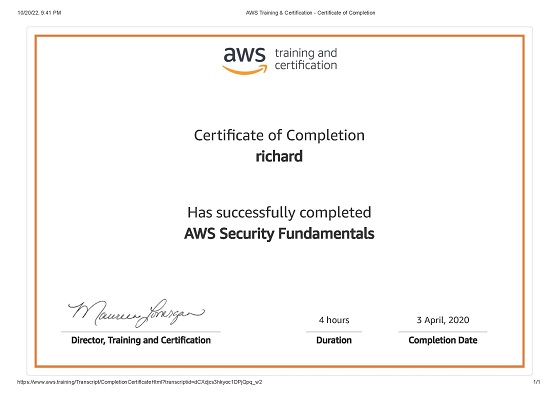
Encryption configurations, KMS policies, and network traffic management basics.
Advanced strategy patterns focusing on high resilience across multi-tier networks.
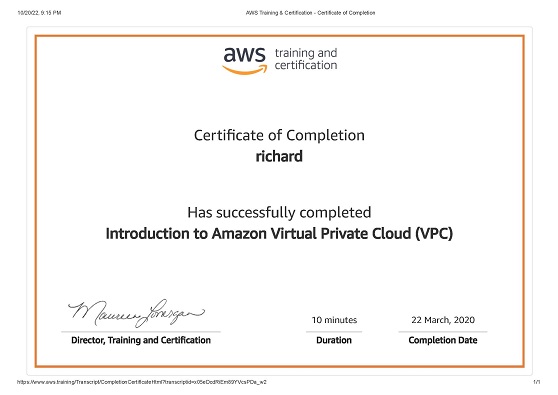
Subnet configuration networks, internet gateways, and isolated routing rules.
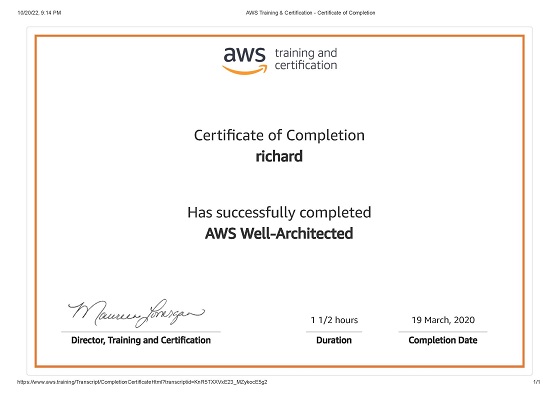
Evaluating structural infrastructure choices using five primary design guidelines.
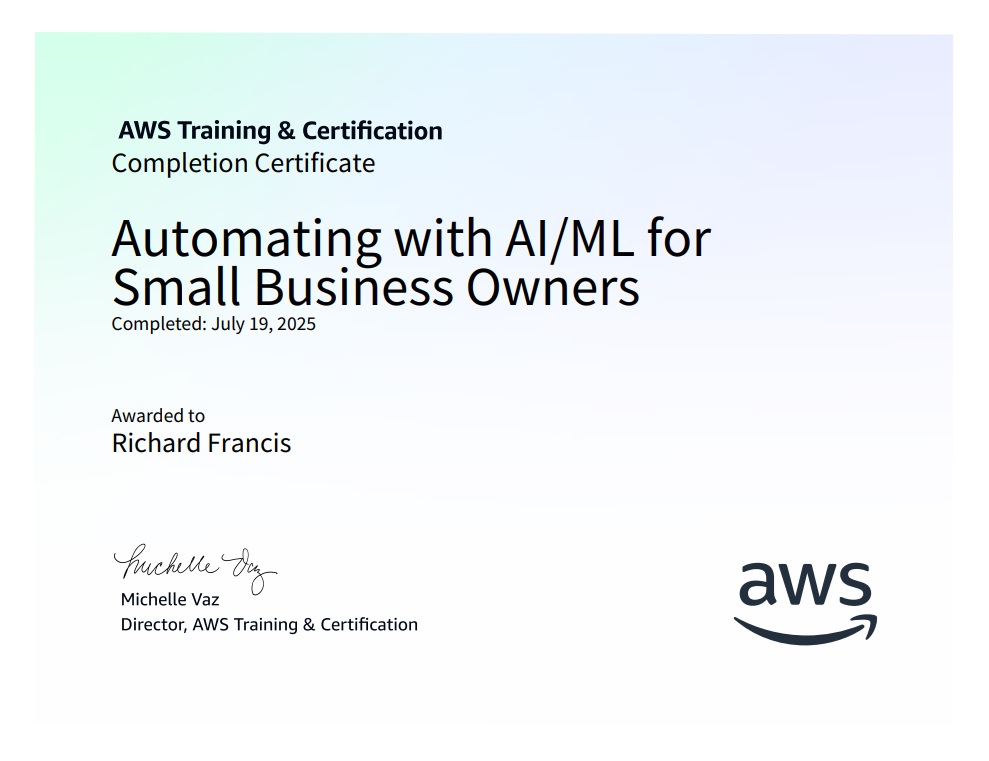
Practical introduction to applying AI and ML automation in small business workflows.
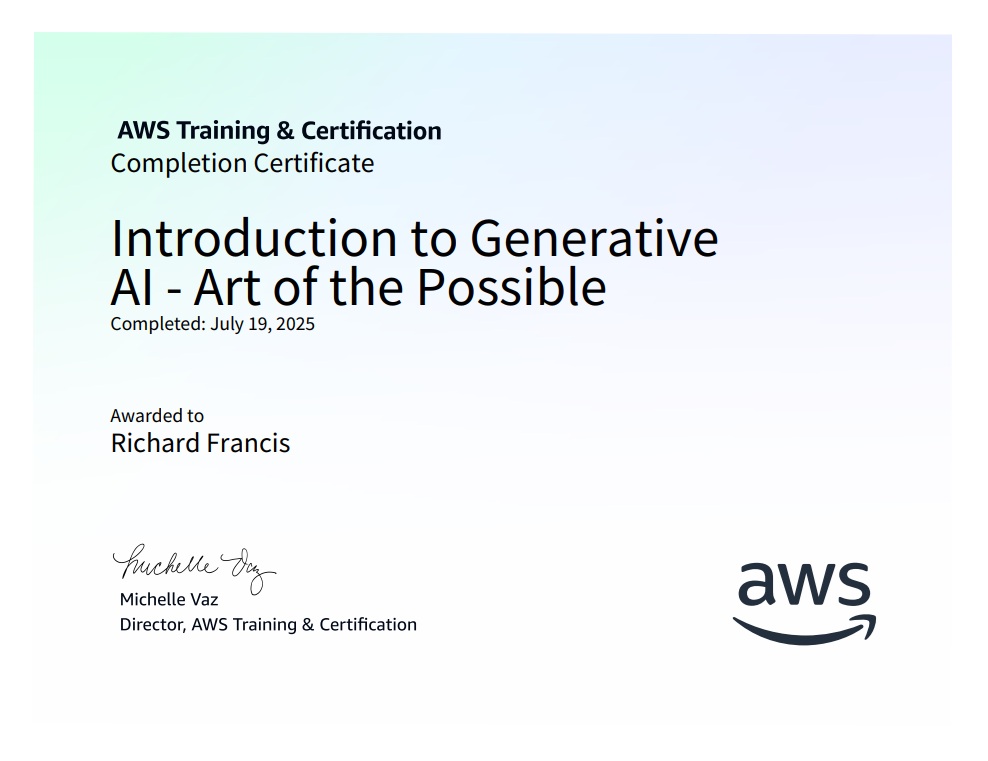
Overview of generative AI capabilities, use cases, and emerging patterns.
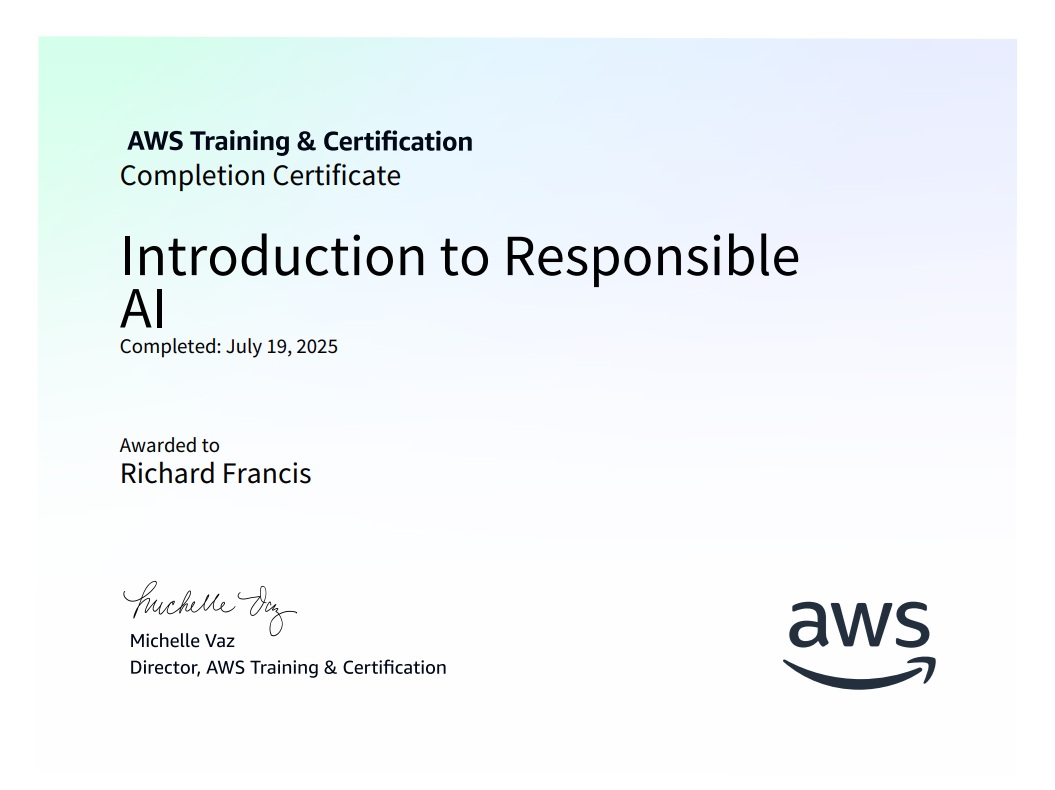
Covers ethical AI principles, fairness, transparency, and responsible deployment.
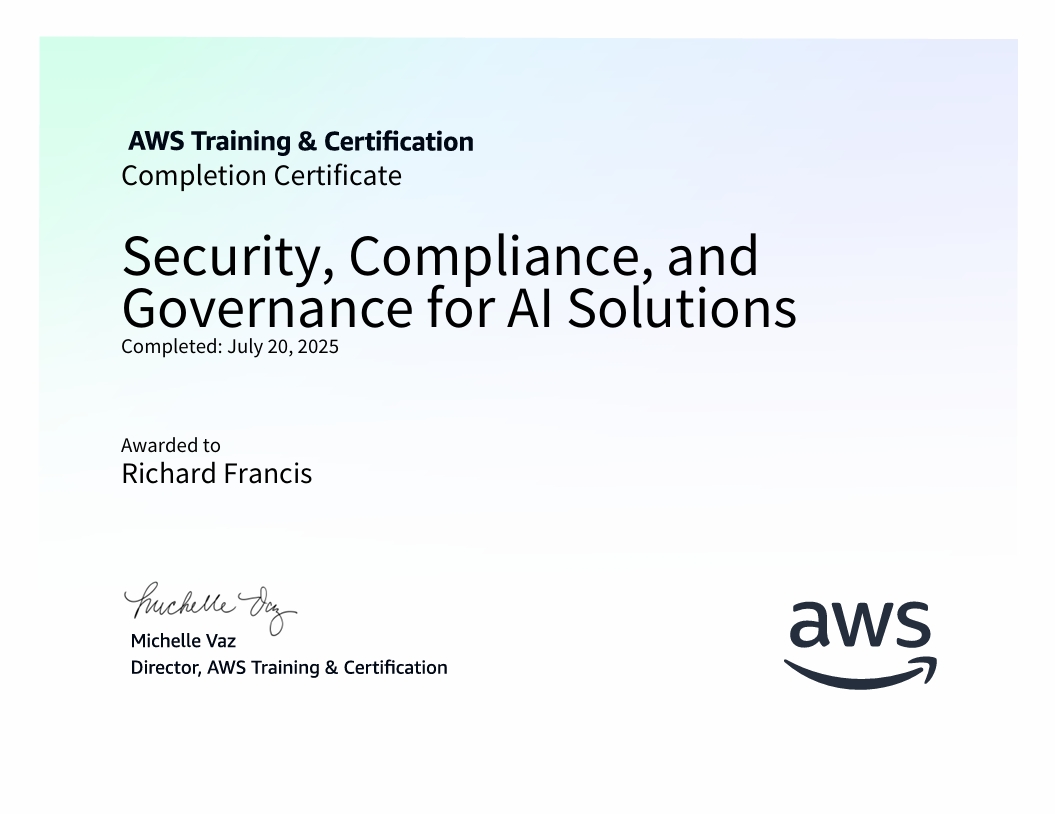
Security and governance considerations for AI systems in production.
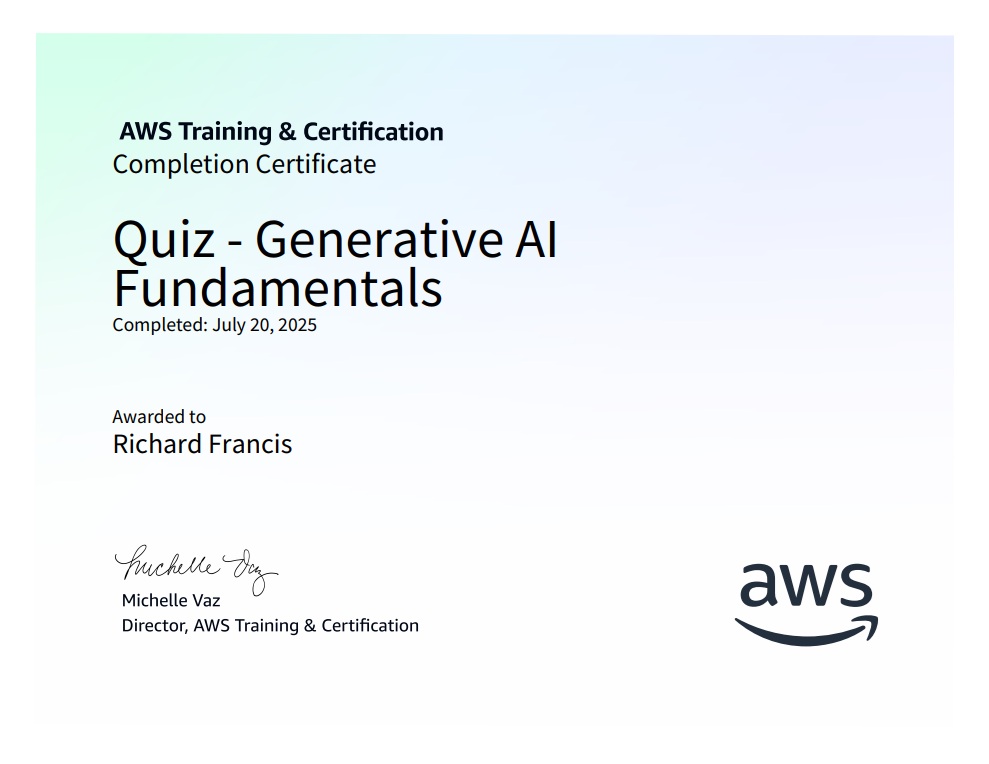
Assessment covering foundational concepts in generative AI.
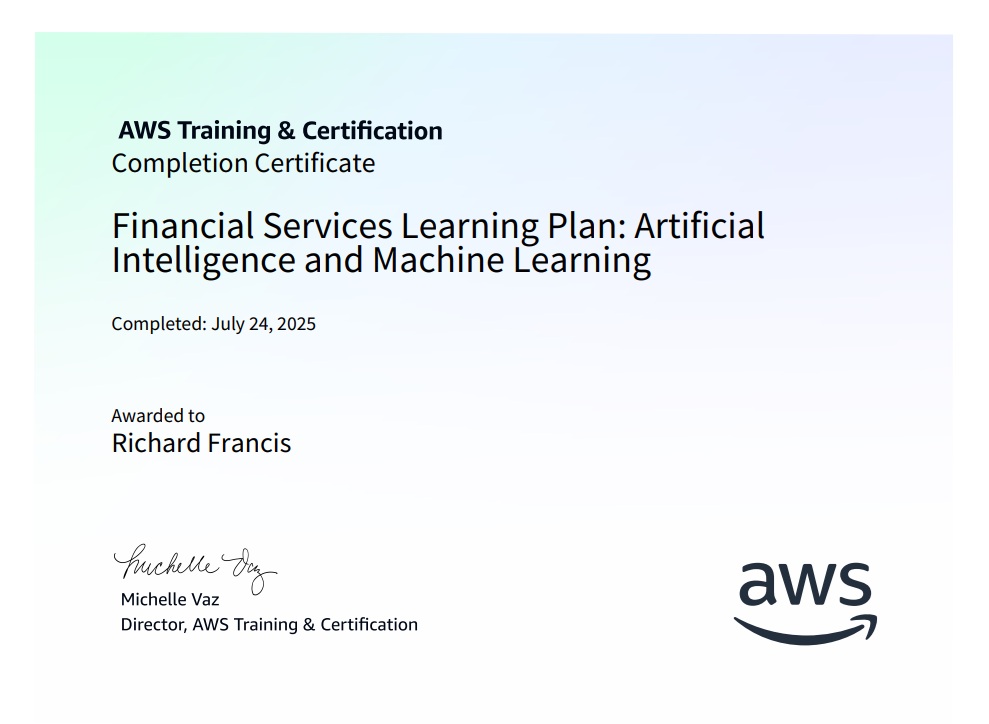
AI and ML applications in financial services, including risk and automation.
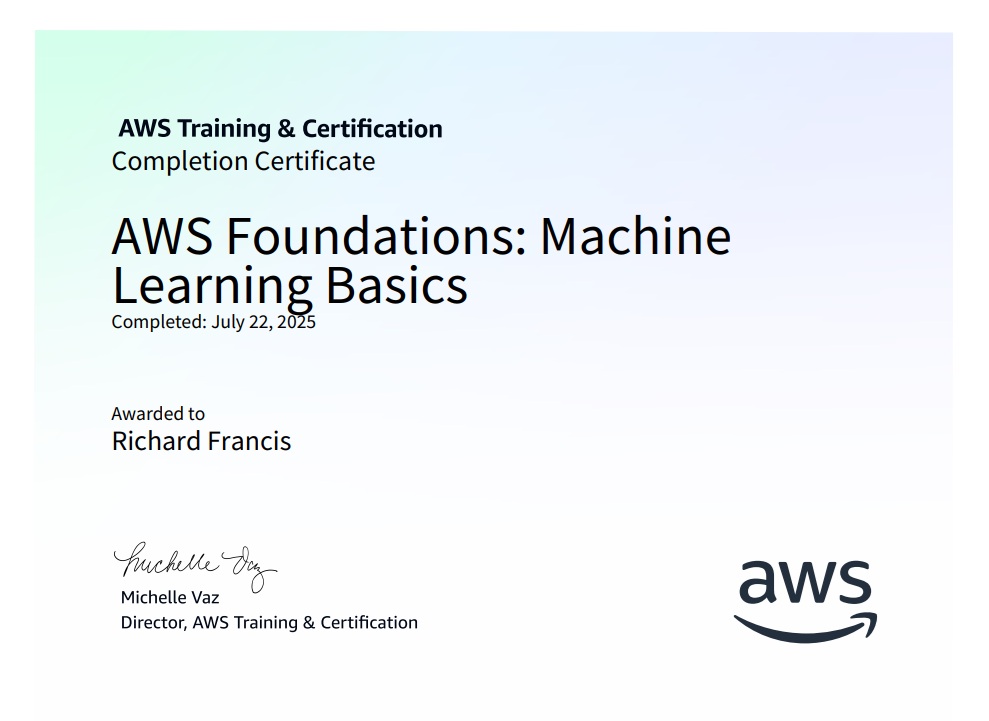
Core ML concepts, algorithms, and AWS ML tooling.
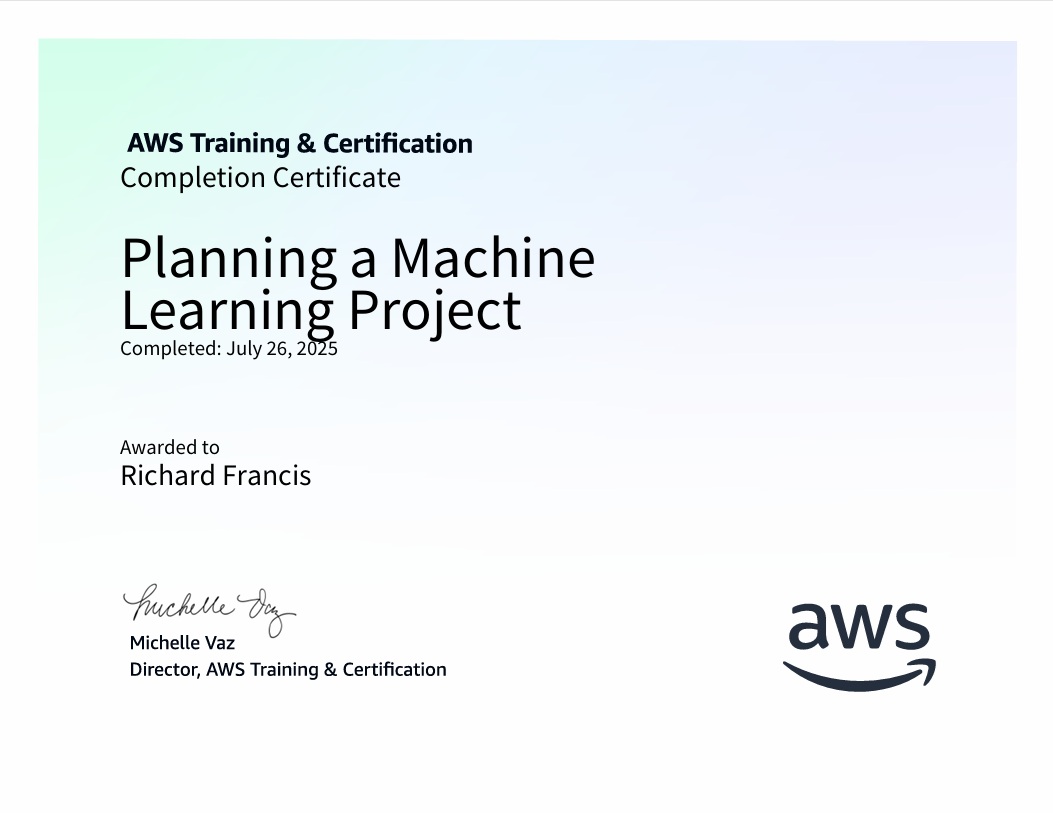
Structured approach to planning and delivering ML projects.
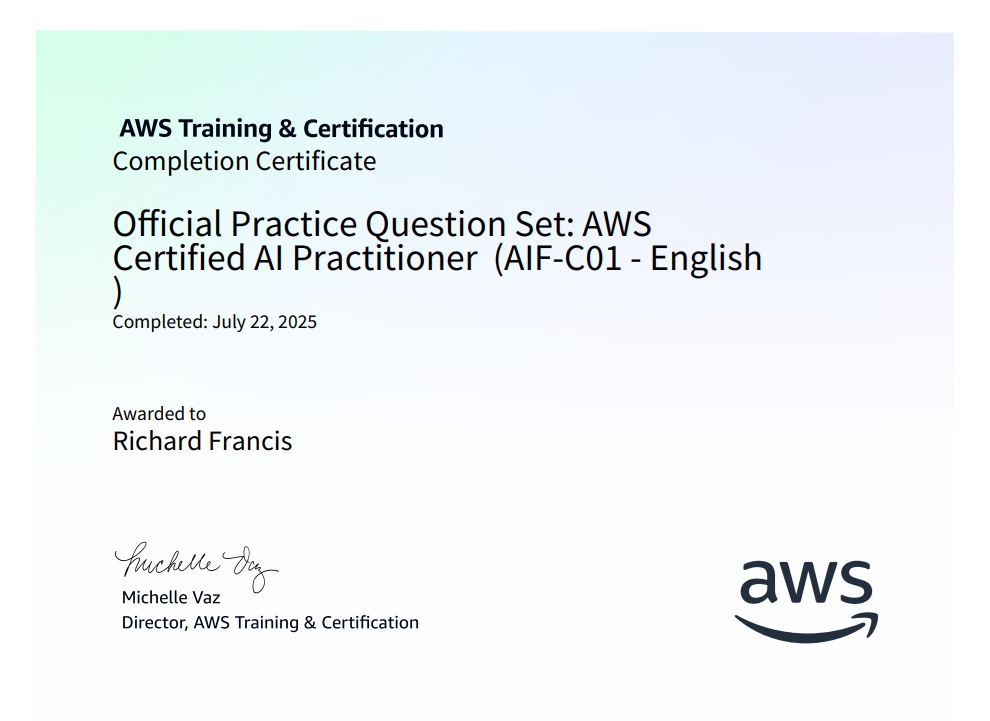
Official AWS practice questions for the AI Practitioner certification.
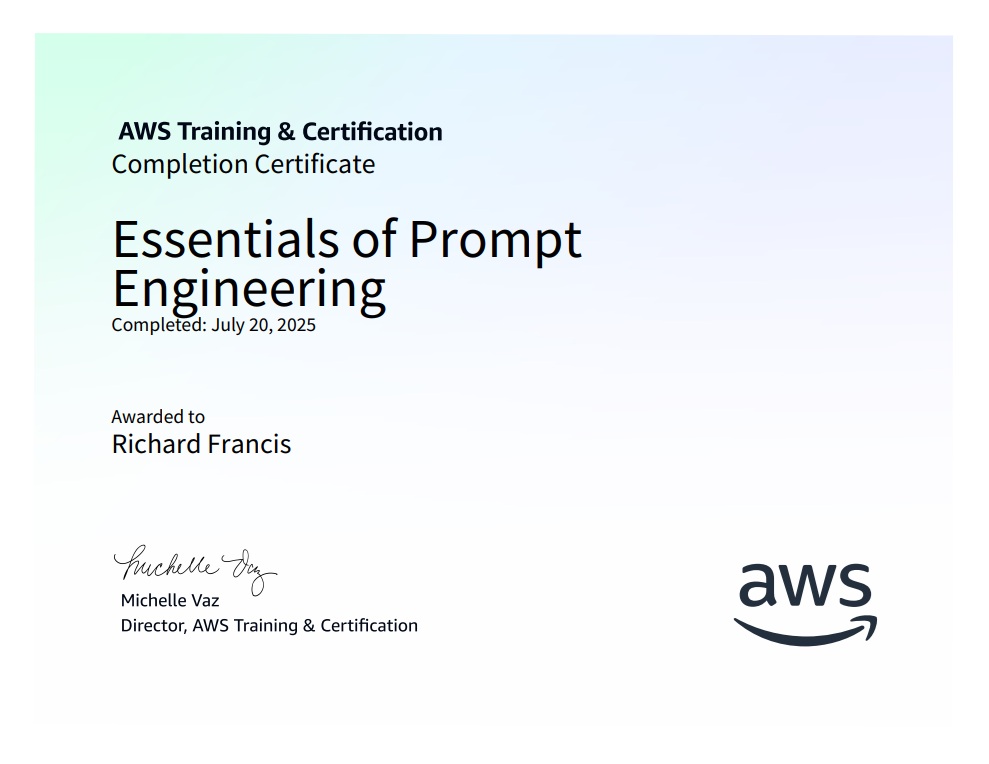
Techniques for designing effective prompts for LLMs.
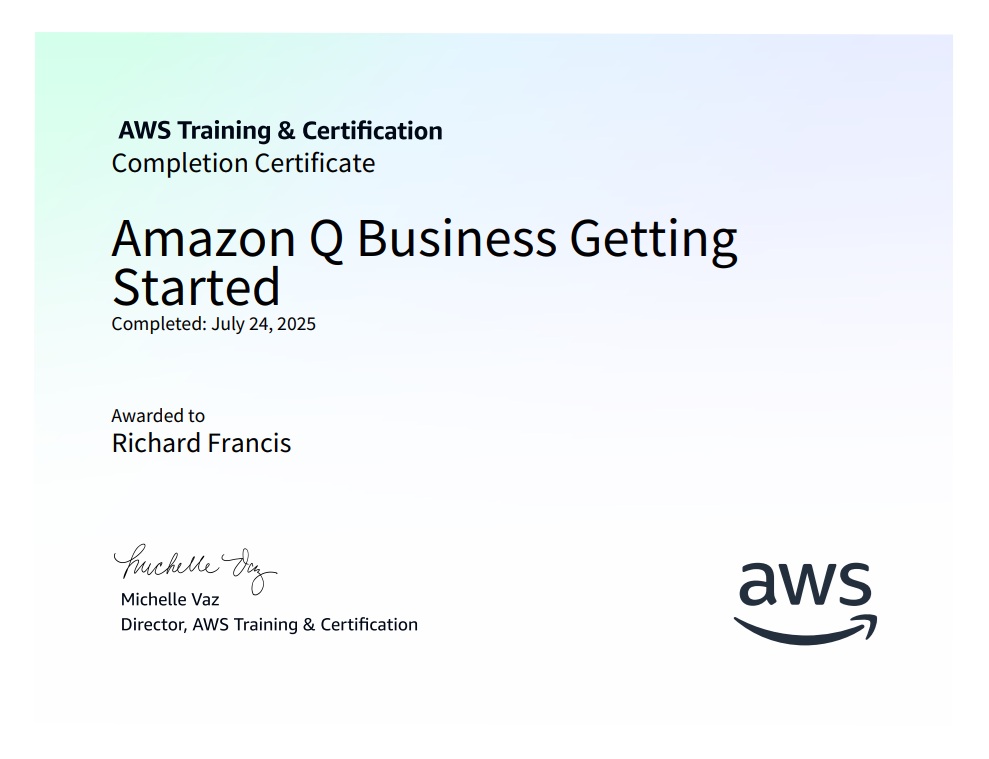
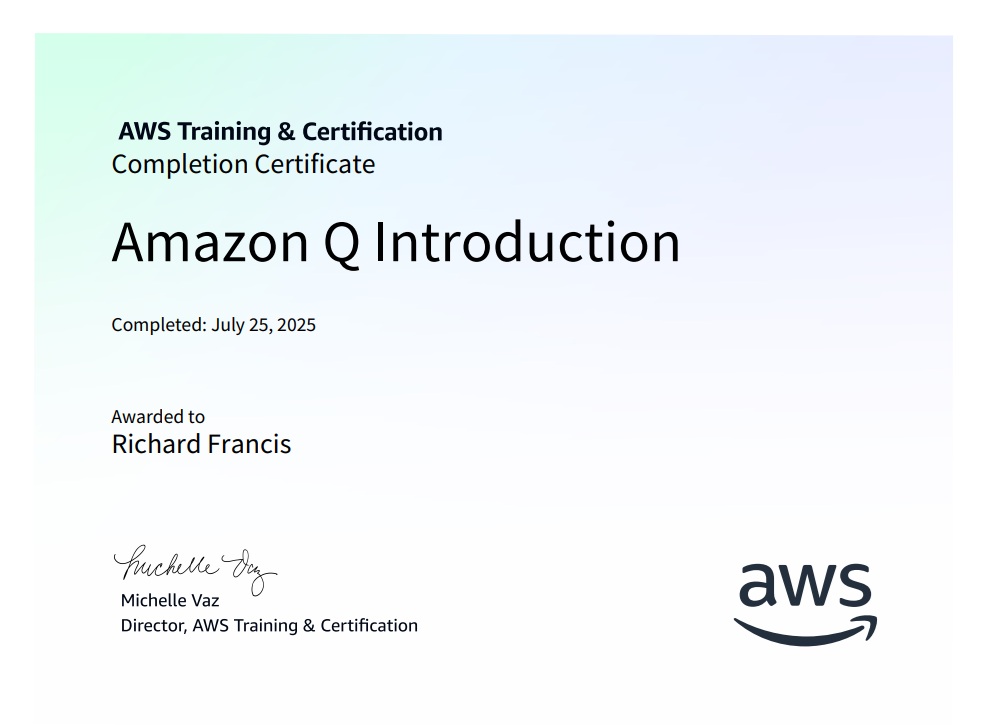
Overview of Amazon Q capabilities and enterprise use cases.
Introduction to Amazon Q and its developer ecosystem.
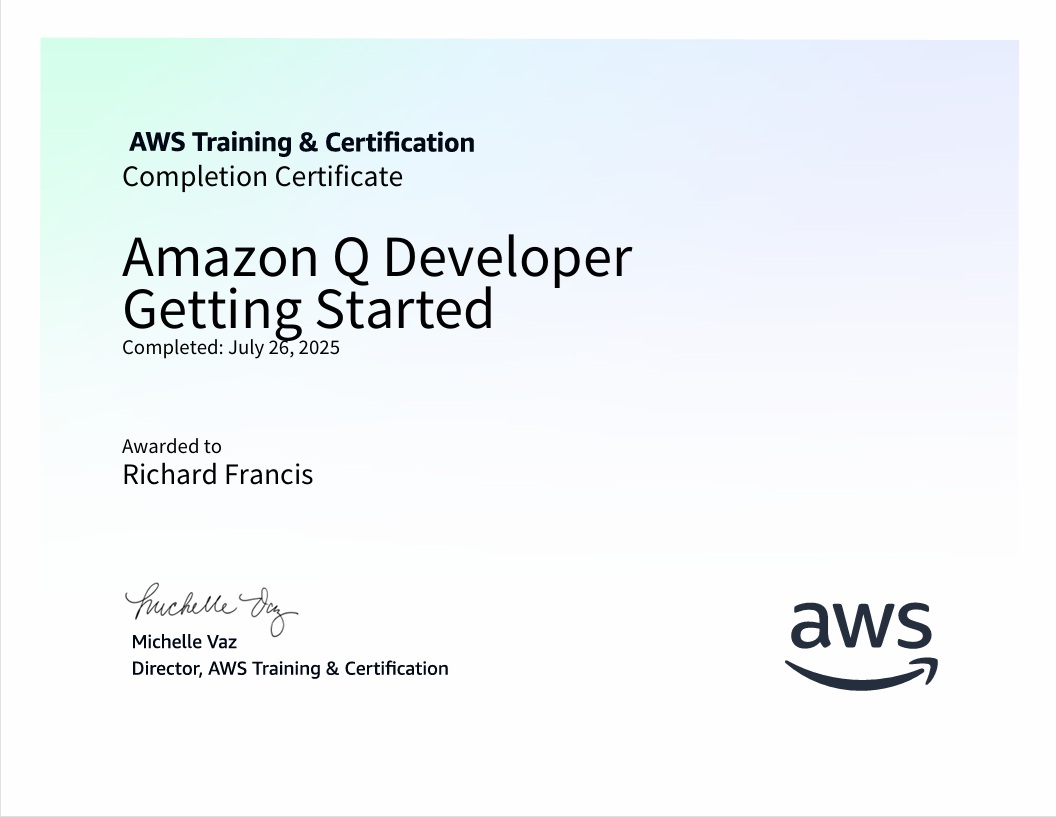
Developer-focused introduction to Amazon Q tools and workflows.
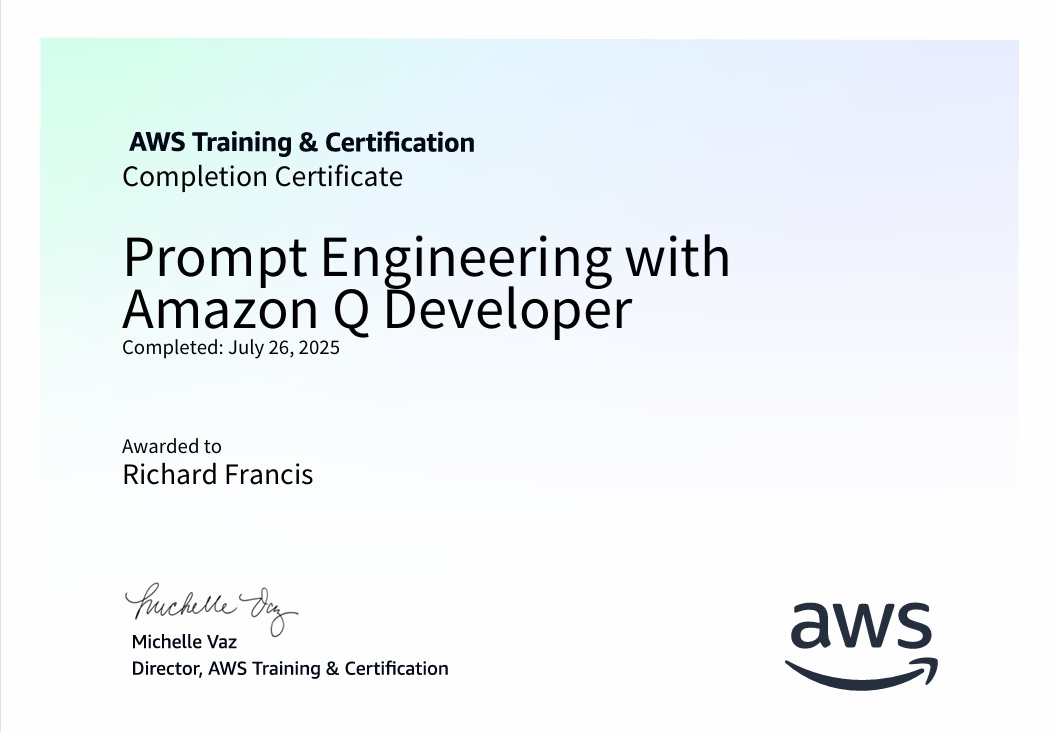
Prompt engineering techniques tailored for Amazon Q Developer.
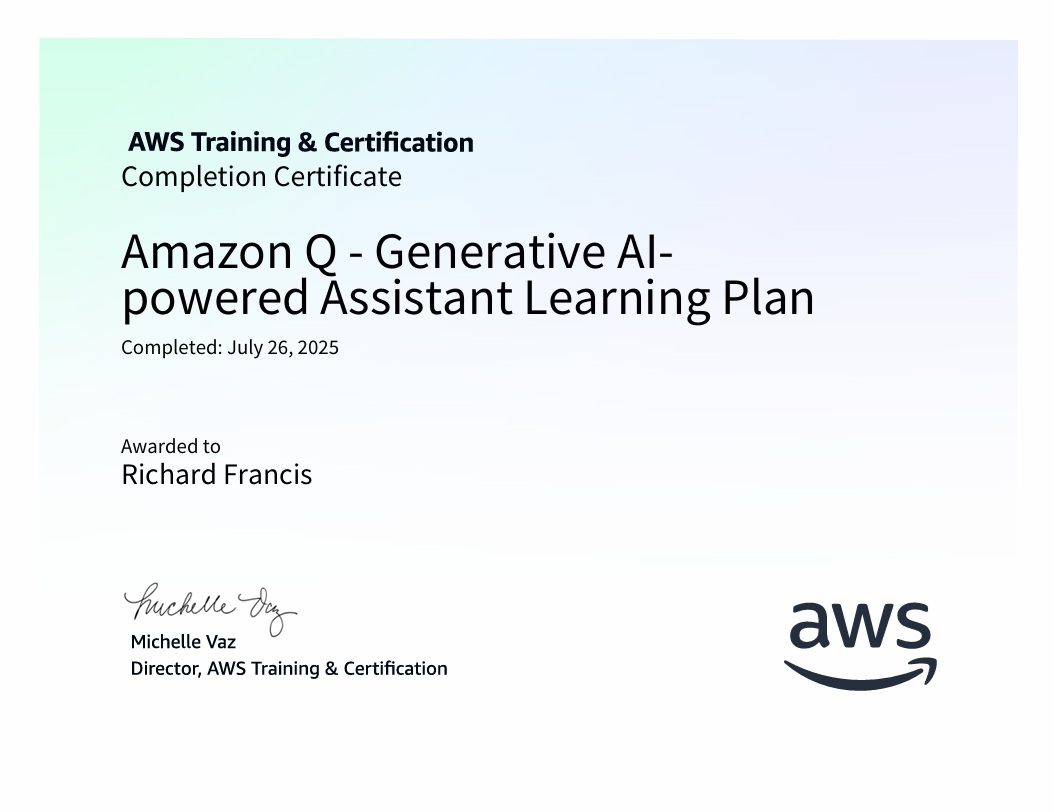
Generative AI capabilities within Amazon Q.
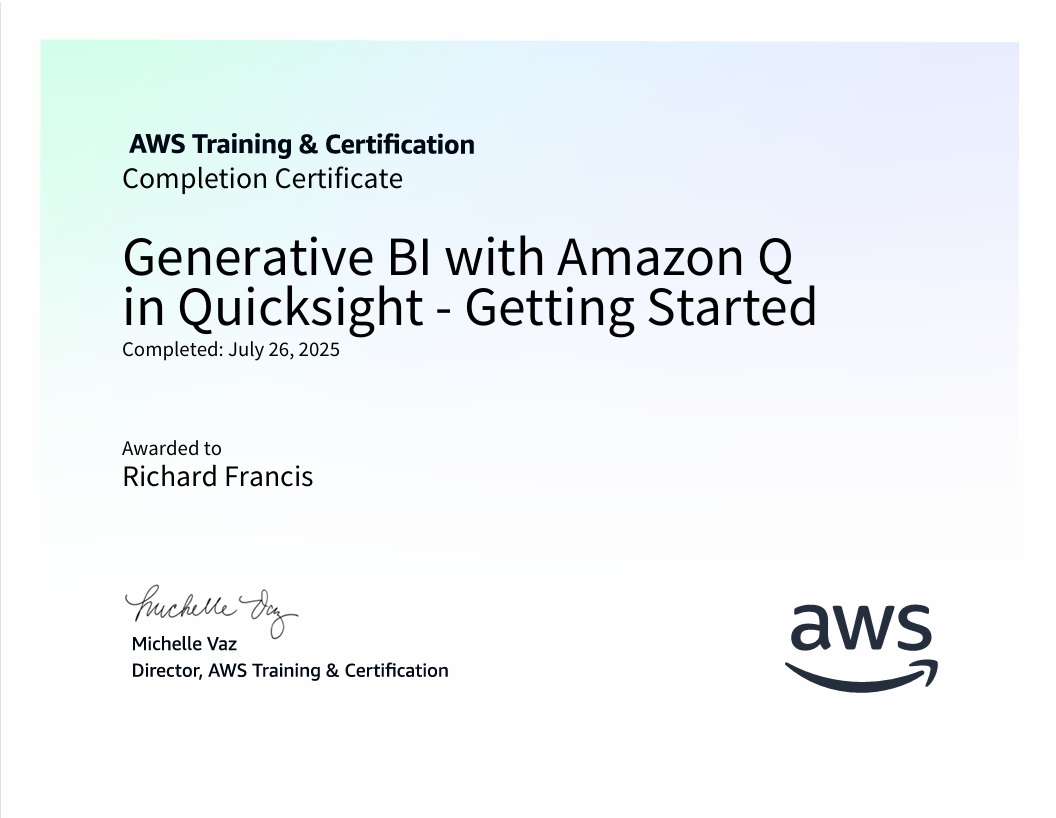
Using Amazon Q to generate BI insights in QuickSight.
Executive-level overview of generative AI strategy and impact.
Deploying and integrating foundation models using Amazon Bedrock.
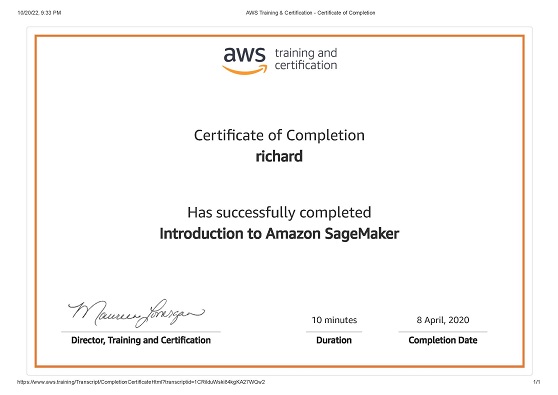
Introduction to SageMaker features and ML workflow support.
Core SageMaker concepts and ML development workflow.
Building generative AI applications using AWS tooling.